
General Bonding
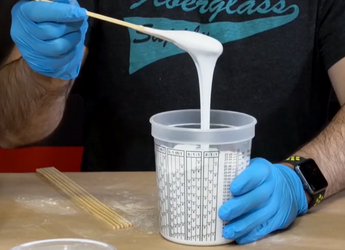
When joining composite or wood components utilizing thickened resin (epoxy, polyester, or vinyl ester), the key is to customize your blend by selecting the right fillers for the job specifics. By mixing your own blend, you can precisely control the viscosity and mechanical properties of the bond.
When working within an initial build process, the best practice is to utilize the same resin type with which the component is being constructed. For retrofit and repair work on post-cure resin systems, epoxy will achieve the best bond (even if the part was originally constructed utilizing a polyester or vinyl ester resin system).
Common General Bonding Fillers and Their Functions
Different fillers provide specific benefits depending on the requirements of the job at hand:
- Glass Fibers and Strands: essential for high-load areas to increase overall stiffness and structural strength
- Cotton Flock: increases thickness and provides gap-filling capabilities with added flexibility
- Wood Flour: A versatile filler for thickening and gap-filling while maintaining moderate strength
- Cab o Sil: primarily used for thickening resin to prevent sag or draining of the resin; added last
- Glass Bubbles or Phenolic Microballoons: occasionally added in large volume applications where bond is less structurally critical; can help reduce weight and total amount of resin used
- Talc: sometimes added to achieve specific textures and to lower sanding effort when weight is less important
Application Methods
The “perfect” mix depends on your assembly method and the requirements of the project’s design:
- Clamped or Vacuum-bagged Bonding: for applications involving clamping or vacuum-bagging, you typically only need enough thickening agent (Cab o Sil, Cotton Flock, or Wood Flour) to allow the thickened resin to stay on the surface without running when applied with a notched trowel.
- Structural Gap Filling: In scenarios requiring more robust reinforcement, incorporating milled fibers or chopped strands alongside thickening agents creates a high-strength structural adhesive.
By mastering these blends, you can tailor your adhesive blend to the specific demands of each unique project, ensuring a bond that is as strong or as flexible as the design dictates.
- Product
- Qty in Cart
- Quantity
- Price
- Subtotal
-
 $23.89
 -
 $169.98