
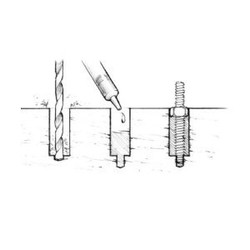
Hardware Bonding
When high load-bearing capacity is the priority, resin (epoxy, polyester, or vinyl ester) should be thickened with high-density fillers to create a robust structural adhesive. This composite (typically mixed to a “peanut butter” consistency) is designed to resist compression and transfer loads more effectively between the hardware and the substrate.
When working within an initial build process, the best practice is to utilize the same resin type with which the component is being constructed. For retrofit and repair work on post-cure resin systems, epoxy will achieve the best bond (even if the part was originally constructed utilizing a polyester or vinyl ester resin system).
Recommended Fillers
- Thickening: Cab o Sil is the primary agent used to control viscosity and prevent sag; added last to the mixture
- Structural Reinforcement: incorporating milled glass fibers or chopped strands significantly increases tensile and impact strength
- Fiber Interlock: Cotton flock is often added to improve the internal “mesh” of the compound, providing excellent multidimensional strength
Aesthetic and Functional
- Wood Flour: this can be useful when bonding hardware to wood substrates; this can add thickness and density while providing a natural color match for some wood species
- Phenolic Microballoons: these are useful for achieving a specific reddish-brown hue, although they are much less dense than structural fibers and should be used sparingly in applications where high load-bearing capacity is a priority.
*Pro-Tip: When bonding hardware, apply a thin coat of unthickened resin before the thickened mixture is applied. This ensures better penetration into the substrate and a better bond as the thickened mix cures.
- Product
- Qty in Cart
- Quantity
- Price
- Subtotal
-
 $27.32
 -
 $121.11
 -
 $5.29
$5.29 -
 $6.15
$6.15 -
 $7.07
$7.07 -
 $23.89
 -
 $169.98